Love the Wood Look but Not the Refinishing Price? Meet the Faux Wood Finish
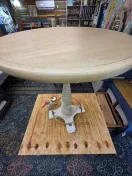
A customer recently brought us an ornate bistro table with a dark stain that looked straight out of the ’90s. They wanted the warm, natural look of refinished wood, but a full strip-and-refinish wasn’t in the budget.
Why Ornate Pieces Cost More to Refinish
This table has carvings and detailed edges, and that changes the job. Carved and ornate details have to be sanded by hand, one curve at a time. That’s a lot more labor, and labor is what drives the price of a refinish.
Instead of putting our customer’s budget into hours of hand sanding, we offered a middle option: a faux wood finish. It saved them $500 compared to a full refinish, and the table still has that rich, layered wood look they were after.
What Is a Faux Wood Finish?
A faux finish builds the look of wood with layers of color and texture, instead of stripping a piece down to bare wood and staining it. Done by hand and done well, it has depth and variation, not a flat, painted look.
How We Did It
Here’s the layering process we used on this bistro table:
- Natural base color primer. This sets the foundation tone, the “wood” color everything else builds on.
- Texture between gel stains. We built up layers of texture between coats of gel stain to mimic grain and the natural variation of real wood.
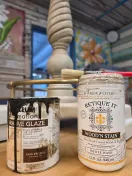
- Brown Java glaze. A rich, dark glaze settles into the texture and adds depth and warmth.
- Whitewash stain. The final color layer softens everything and gives it that light, weathered finish.
- Protective topcoat. We sealed it with Old Masters exterior topcoat in the flat matte finish our customer asked for. The tabletop got three coats to stand up to everyday use, and the base got one.
Each layer does its own job. Together, they give the piece the character you’d expect from real wood.
Faux Finish or Full Refinish: Which Is Right for You?
A faux finish may be a good fit if:
- You love the wood look but want to keep costs down
- Your piece has carvings or ornate details that would mean hours of hand sanding
- You want a specific look, like whitewashed, weathered, or aged
A full refinish may be the better choice if:
- You have solid hardwood with beautiful grain worth bringing back
- The piece is an heirloom or has real value
- You want the real wood showing through for the long haul
Not sure which way to go? That’s what consultations are for. We’ll look at your piece, talk through your budget, and give you honest options.
Have a Piece That Needs New Life?
Whether it’s a full refinish or a budget-friendly faux finish, we’d love to help. Call or text us at 813-447-7443, or stop by the shop at 1506 13th St. W. in Bradenton.
Old things become new creations.
The Finished Faux Wood Bistro Table